
Symbols in slots: what they give the player
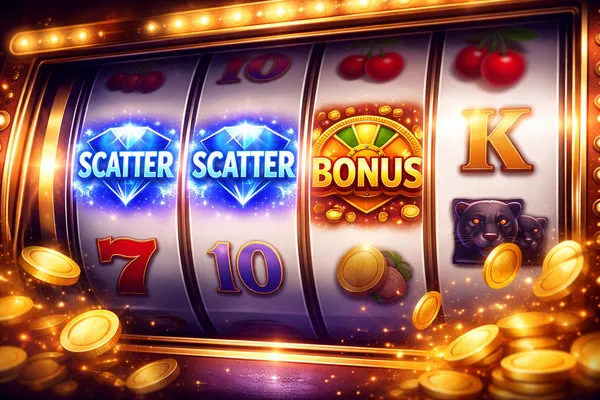
Slot symbols are more than themed pictures on the reels. They are the visible part of the rules: they decide how wins are formed, which features can trigger, and why two games that look similar can feel completely different. If you understand what each symbol does, you stop guessing and start reading the game the way it was designed to be read. This guide breaks down the key symbol types and shows how to check them in a practical way before you spin at NolimitWay—so the heart of slots becomes easier to understand, even if you’re new to modern mechanics.
What slot symbols are and how to recognise them quickly
Every slot uses a mix of “regular” symbols and special ones. Regular symbols mostly determine the baseline rhythm of small and medium wins, while special symbols shape the features that can change the outcome of a session. The trick is to identify which symbols only pay, which symbols modify other symbols, and which ones unlock new modes. Once you can do that, you’ll read games casino slot machines with more confidence and fewer assumptions.
Standard symbols: lower vs higher paying icons
Standard symbols are the ones you’ll see most often in the base game. In many titles they include simple icons (sometimes card ranks like 10, J, Q, K, A), plus a few “premium” themed symbols. Lower-paying symbols usually appear more frequently, which is why they’re often responsible for small returns that keep the game moving. Higher-paying symbols tend to show up less often, but they’re the building blocks for bigger base-game hits when the right pattern lands.
What this means for a player is straightforward: the symbol set hints at how the slot balances frequency and size of wins. A game that relies heavily on low symbols may produce more frequent but smaller payouts, while a game that emphasises premium symbols can feel quieter until it connects. You can’t predict outcomes, but you can understand why the same stake may produce very different “textures” across different titles.
Themed symbols and why they matter beyond visuals
Themed symbols often do a second job: they help you read the slot’s logic. A character might represent a premium symbol, a treasure item might hint at collecting mechanics, or a special artefact might foreshadow a bonus mode. That visual language is useful, but it should never replace the rulebook. Treat the theme as a map that points you toward what to verify next in the paytable and feature descriptions.
Special symbols: the ones that change the game rules
Special symbols are where most modern slots become “interactive” from a rules perspective. These are symbols like Wild, Scatter, and dedicated Bonus icons, plus variants that lock, expand, collect values, or add multipliers. They don’t just pay; they alter how other symbols behave, how reels resolve, or how a feature begins. In a typical slot casino game, special symbols are the main reason two spins can have completely different potential even at the same stake.
Because special symbols can come with exceptions, the only reliable approach is to confirm their behaviour in the paytable: what exactly they substitute (if they substitute at all), whether they pay on their own, and whether they trigger features in the base game, bonus game, or both. If a slot offers multiple modes, these symbols may also behave differently depending on where you are in the game. Recognising them quickly is step one; checking their rules is what turns that recognition into something useful.
The paytable: where the real rules of a casino game slot machine live
If you take one habit from this article, let it be this: always open the paytable before you commit time or money. The paytable is not “extra information”; it is the core manual that explains what the reels actually mean. Two games can share the same theme, the same reel layout, and even similar symbols, yet behave differently because their paytable rules are different. When people feel a game is “unfair” or “confusing”, it’s often because they’re playing without knowing the conditions that define a win.
How to read payouts without guessing
Start by identifying how the game defines a winning combination. Some slots pay along fixed paylines, others use ways-to-win mechanics, and some pay in clusters where symbols just need to touch. The paytable will show which symbols pay, the minimum number required, and whether the stake affects the payout linearly or through a separate “coin value” system. Look for the section that explains how wins are calculated: it’s usually where misunderstandings begin.
Next, check for rule modifiers: multipliers, symbol upgrades, and feature-specific payout rules. A casino game slot machine may apply a multiplier only during free spins, only on certain reels, or only when a particular symbol lands. These details change expectations. They don’t promise anything, but they explain why a feature can feel significantly stronger than the base game—or, sometimes, why it’s mainly entertainment value with occasional spikes.
Paylines vs clusters vs ways: why “three of a kind” isn’t universal
On paylines, symbols typically must land on adjacent reels and follow a specific line pattern. That’s why you can see three matching icons on the screen and still get no payout: they might be separated, on the wrong line, or not starting from the required reel. On ways-to-win systems, the same symbol often needs to appear on consecutive reels from left to right, but it can land in multiple positions on each reel to increase the number of “ways”. On cluster slots, the rules can be different again: a group of symbols touching (sometimes in any direction) can trigger a win even if it’s not aligned as a line.
This is also where players commonly misread what matters on a spin. In a ways game, “more matches” can mean more potential combinations, while in a cluster game, the size and shape of the cluster can be the key. The paytable will tell you the minimum cluster size, whether diagonals count, and whether a win removes symbols to allow cascades. Once you know the model, the screen stops being a collection of random pictures and becomes a set of conditions that either were met or were not.
Why the same symbol can pay differently in different modes
Many modern slots change the rule set depending on the mode you’re in. Free spins might add a multiplier, introduce special Wild types, or upgrade certain symbols. Some games also include optional features that alter behaviour in exchange for an adjusted return profile. The important point is simple: don’t assume a symbol behaves the same everywhere. If a symbol’s payout or function changes in a bonus round, the paytable will usually show a separate section for that mode—read it before you decide what the game “is like”.
Wild symbols: the most practical “helper” in games casino slot machines
Wild symbols are often the easiest special symbol to understand and the most immediately useful. In most games, a Wild acts as a substitute to help complete a paying pattern, which increases the chance that a near-miss becomes a win. But Wilds can also be designed to do more than substitute. Some expand to cover a reel, some stick in place, and some add multipliers. Because of this, Wilds are one of the clearest examples of why reading the rules matters: the name “Wild” tells you the category, but not the details.
What Wild usually substitutes and what it typically doesn’t
In a typical slot casino game, a Wild can substitute for standard paying symbols to form a winning combination. This is why you’ll often see it described as a “substitute symbol”. However, Wilds usually do not substitute for Scatter or dedicated Bonus symbols, because those symbols are designed to trigger features under their own conditions. The game needs them to retain their unique identity; otherwise, triggers would be too easy and the slot’s design would break.
There are also games where Wild substitution is limited: it might work only on certain reels, only in certain rows, or only in the base game. Some Wilds can pay as a symbol on their own, while others cannot. These distinctions are not guesswork—they’re written in the paytable. A quick check here saves you from the most common misconception: assuming a Wild “replaces anything”. It rarely does, and the exceptions are always stated.
Common Wild types you’ll meet
Beyond the standard substitute Wild, you’ll often encounter expanding Wilds that grow to cover an entire reel or a larger area, which can dramatically improve connection potential on that spin. Sticky Wilds remain in place for a set number of spins or for the duration of a feature, which can build momentum. Moving or “walking” Wilds shift position between spins, changing where they can help. Multiplier Wilds apply a multiplier to wins they participate in, which can increase payout size without changing the basic win condition.
The key is not to memorise every name, but to understand the effect category: does it increase coverage, persist over time, move, or boost payouts? Once you know the category, you know what to look for next: duration rules, reel restrictions, stacking behaviour, and whether multiple Wilds can combine. These are the details that influence how powerful the Wild can be in practice.
How Wilds affect the feel of the game
Wilds can make a game feel more “connected” because they reduce the number of perfect alignments needed to complete a win. In some titles, frequent standard Wilds support a steadier rhythm of small wins, while in others the Wilds appear less often but come with higher impact—expanding, sticky, or multiplied. That difference can change how a session feels even if the game looks similar at a glance.
Wilds also interact with other mechanics. In cascade games, a Wild that persists (or reappears) can help create chains of wins. In free spins, special Wild rules can become the main driver of the feature’s value. If you’re looking for the “heart of slots” in modern design, Wild behaviour is a good place to start: it shows how one symbol can shift both probability and player experience through clearly defined rules.
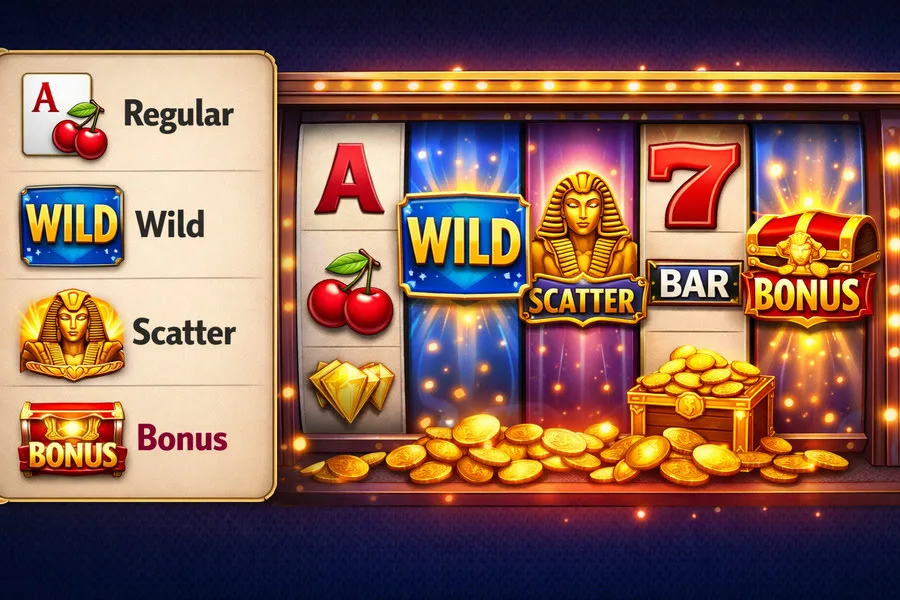
Scatter symbols: triggers, not just payouts
Scatter symbols are often misunderstood because they can behave in more than one way. In some games, they pay like regular symbols but under special placement rules; in others, they pay little or nothing directly and are mainly used to unlock free spins or other features. The consistent idea is that Scatters are usually not tied to a specific line pattern, which makes them feel more “event-based” than “pattern-based”. To use Scatters intelligently, you need to know two things: whether they pay, and what they trigger.
Scatter payouts: with paylines or without
Most commonly, Scatters pay “anywhere”, meaning they can appear on the reels in any position and still award a payout if you land enough of them. This is different from a payline win, where placement follows a line or adjacency rule. However, not every game uses the same approach. Some titles treat a Scatter purely as a trigger and do not award a payout for landing it outside a feature. Others may require the Scatters to appear on specific reels, even if the exact positions on those reels don’t matter.
The paytable will tell you the minimum number of Scatters required for a payout and whether that payout is tied to the total stake, coin value, or another internal calculation. If you’re trying to understand a game’s baseline potential, this matters: a Scatter that pays modestly can soften dry streaks, while a Scatter that exists only as a trigger shifts the focus toward feature entry rather than base-game returns. Either model is valid, but they feel very different in practice.
Free spins and extra features: what Scatters most often unlock
In many games, Scatters are the gate to free spins. The feature might be simple—just a set number of spins—or it might change the rules by adding special Wilds, increasing multipliers, or introducing respins. Some games also use Scatters to unlock side features such as pick-and-click bonus rounds, extra reels, or an additional screen where values can be collected. In a slot casino game, this is where the experience often shifts from “regular spinning” to a mode with altered rules and a different pace.
When you read the feature description, focus on the mechanics, not the theme. Ask: do free spins add a multiplier? Do certain symbols become sticky? Is there a collect mechanic that grows over time? Are there retriggers, and if so, what activates them? These details help you understand why two features that both say “Free Spins” can produce very different outcomes. They also help you set realistic expectations: a feature can be entertaining and still be built around rare high-impact events rather than frequent moderate wins.
Trigger thresholds and why they vary
Many games use a familiar threshold such as three Scatters to trigger free spins, but this is not universal. Some titles require four or more, some use different thresholds depending on the reel set, and some only allow triggering in specific modes. The reason is design balance: Scatters are a gateway, so their trigger rate influences the entire rhythm of the game. Instead of assuming the “standard” rule, check the paytable for where Scatters must appear, how many are needed, and whether the trigger is available in the base game, the bonus, or both.
Bonus symbols and bonus rounds: when value isn’t a direct payout
“Bonus” can mean two different things in slot design: a dedicated symbol that unlocks a feature, or a feature itself that may be entered through different conditions. Some games use an explicit Bonus symbol that acts like a key, while others use a combination of symbols, meters, or collect mechanics to enter a bonus round. What matters for the player is the same: bonus value is often indirect. You may not see a payout the moment the symbol lands, but it can change the game state in a way that carries more potential than a simple line win.
Bonus icons that don’t pay on the base screen
It’s common for Bonus symbols to have no payout in the base game. That can surprise players who expect every symbol to “do something” immediately. But in many designs, the Bonus icon is not meant to be a paying symbol; it’s meant to be a trigger. The reward comes from the bonus round it unlocks—free spins with special rules, a pick-and-click mini-game, a wheel spin, or a collect feature that assigns values and then totals them.
This is why checking the paytable is essential. The game will usually state whether the Bonus symbol has a payout, whether it triggers only when it appears in a certain count, and whether it needs to land on specific reels. Sometimes the trigger can require a combination, such as a Bonus symbol plus another symbol (like a collector) to activate. If you skip these details, the base game can feel confusing, because you won’t understand why the same-looking setup sometimes triggers and sometimes doesn’t.
Typical bonus round formats
Bonus rounds usually come in a few common formats. Pick-and-click bonuses let you choose objects that reveal instant prizes, multipliers, or additional picks. Wheel features spin for fixed prizes or multipliers. Some games run a short “mission” style bonus where you collect items over a few steps. Others use hold-and-win style screens where value symbols land and a collector adds them up, often with respins and potential upgrades. The theme might change—treasure, characters, gadgets—but the underlying structure is what you should pay attention to.
When reading the bonus description, focus on what increases value. Is there a multiplier applied at the end? Can you add extra respins? Can the values on symbols upgrade? Is there a cap or maximum win condition described in the rules? Understanding the mechanics helps you interpret what you see on screen. It also keeps expectations grounded: a bonus round can be designed for frequent small prizes, rare spikes, or a mix, and the rules usually hint at which it is.
Separate bonus rules you should always check
Bonus rounds often have their own rule set that differs from the base game. A symbol might gain a multiplier only inside the feature, or a Wild might become sticky only during free spins. Some bonuses also have different pay conditions—for example, they may ignore paylines and use a collect total instead. Before you judge a game, check the “feature rules” section in the paytable, the help screen (often marked with an “i”), and any on-screen rules shown when the bonus starts. Those are the places where the game explains what changes, what persists, and what ends the feature.
Multipliers and enhanced symbols: where a high payout slot machine often “hides” power
Multipliers and enhanced symbols are designed to increase the impact of a win without changing the basic conditions needed to create it. Instead of altering how symbols connect, they change what happens after a win is formed. This makes them especially important in games that feel quiet for long periods and then suddenly deliver larger results. In many modern designs, these mechanics are the main reason a game is described as a high payout slot machine, even if big outcomes are relatively rare.
Multiplier symbols and how they apply
Multiplier symbols can work in several ways, and the difference matters. Some apply a multiplier to the total win of a spin, others only to the line or cluster they are part of. In cascade-based games, a multiplier might increase with each successive tumble, applying to all wins until the sequence ends. In other cases, the multiplier is fixed and only activates when a specific symbol participates in a winning combination.
It’s also common for multipliers to be restricted to certain modes. A slot might run without multipliers in the base game but introduce them during free spins, or apply higher multipliers only after a feature upgrade. The rules usually clarify whether multipliers stack, whether multiple multiplier symbols can combine, and whether they reset after each spin. These details explain why the same feature can feel modest in one game and much stronger in another.
Enhanced, mega, or upgraded symbols
Enhanced symbols go beyond simple substitution or multiplication. A symbol might expand to cover multiple positions, transform into a higher-paying icon, or gain special properties such as persistence across spins. Mega symbols are a common example: they occupy more than one reel position and can help form larger combinations in ways that standard-sized symbols cannot.
Upgraded symbols often appear as part of a progression system. A game may start with a basic symbol set and then upgrade certain icons during a feature, increasing their payout value or altering how they interact with others. These changes are usually temporary, limited to the bonus mode, and clearly explained in the feature rules. Understanding whether an upgrade is permanent for the feature or resets each spin helps you interpret what you’re seeing on the reels.
Risk and reward: why multipliers can be rare
Strong multipliers and symbol upgrades are often balanced by lower frequency. This doesn’t mean they are “harder to win” in a simple sense, but it does mean they are designed to appear less often to maintain mathematical balance. Games that rely heavily on these mechanics may feel slower at first, with fewer noticeable wins, until a multiplier sequence or enhanced symbol event activates. Recognising this structure helps you understand the pacing rather than misreading it as inconsistency.
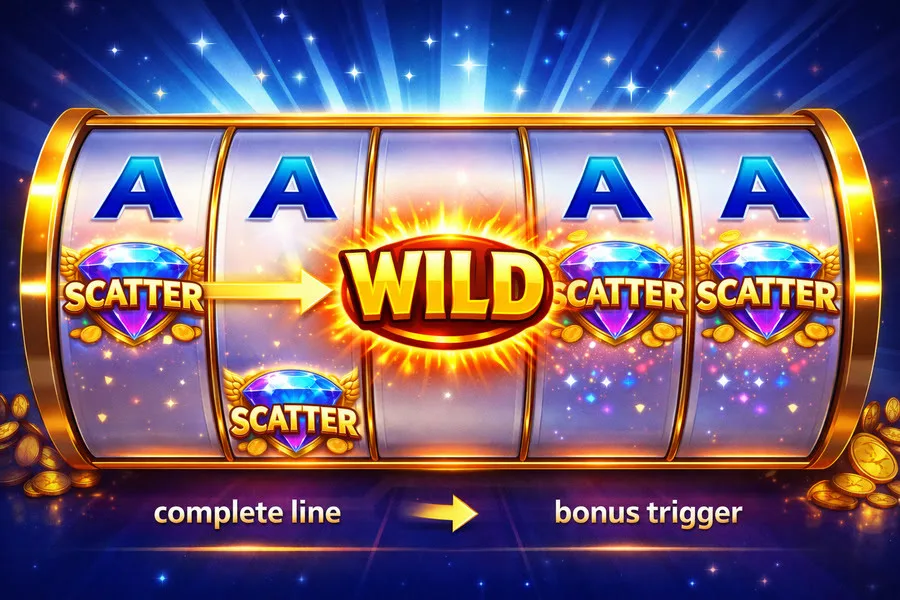
Symbols that change the grid: locking, expanding, collecting
Some symbols don’t just help form wins; they actively change the layout of the reels or grid. These mechanics can lock symbols in place, expand their coverage, or collect values across spins. Instead of focusing on a single result, they often work over several spins or stages, gradually building potential. This is a common design choice in modern slots because it adds a sense of progression within a session.
Sticky / locked symbols
Sticky or locked symbols remain on the screen for more than one spin. They may appear during a feature or be triggered by a specific event, after which they hold their position for a set number of spins or until a condition is met. Their main effect is to reduce randomness over time: once locked, they guarantee a fixed element on the grid, which can support repeated win attempts around them.
The rules usually define when sticky symbols appear, how long they stay, and whether they can stack or overlap. Some games allow multiple sticky symbols to accumulate, while others limit their number or restrict them to certain reels. These limitations are important, because they determine whether the mechanic is meant to create steady pressure or occasional bursts of opportunity.
Expanding / stacked symbols
Expanding symbols increase their size, often covering an entire reel or a large section of the grid. Stacked symbols appear in groups, filling multiple positions on a reel at once. Both mechanics increase the chance of forming a valid combination by increasing symbol coverage rather than changing symbol value.
These mechanics can be temporary or persistent. An expanding symbol might grow only for the current spin, or it might stay expanded during a feature. Stacked symbols may appear randomly or be tied to a specific mode. The key point is that expansion and stacking change spatial probability: they don’t guarantee wins, but they change how likely symbols are to connect under the game’s payout rules.
Transform / collect mechanics
Transform mechanics allow symbols to change into other symbols, often upgrading into higher-paying icons or Wilds. Collect mechanics assign values to symbols and then gather those values through a collector symbol or end-of-feature calculation. These systems shift attention away from individual lines and toward accumulation over time.
When you encounter these mechanics, check how values are assigned, when they are collected, and what ends the process. Some games reset collected values after each feature, while others allow them to grow during a single round of respins. Understanding these conditions helps you see whether the mechanic is designed for frequent modest totals or rare larger outcomes within a slot casino game.
Respins and cascades: how symbols create win chains
Respins and cascades are mechanics built around continuation rather than single outcomes. Instead of resolving a spin and resetting the grid immediately, the game allows symbols to interact across multiple steps. This design can make wins feel more dynamic, because one event can lead into another without starting from scratch. Understanding how these chains work helps explain why some games feel fast-paced while others unfold more gradually.
Cascades (tumbles): what disappears and what can stay
In cascade-based games, winning symbols are removed from the grid after a payout. New symbols then fall into place, potentially creating another win. This process can repeat several times from a single spin, forming a chain of payouts. The key detail is that only symbols involved in a winning cluster or pattern disappear; the rest remain, which shapes what can happen next.
Many games add extra rules to cascades, such as increasing multipliers with each tumble or introducing special symbols after a certain number of cascades. These additions are not random bonuses; they are predefined mechanics that influence how value accumulates during a chain. Checking whether multipliers reset after each spin or persist throughout a cascade sequence is essential for understanding the game’s rhythm.
Respins: what extends them and what ends them
Respins are usually tied to specific conditions. A common example is a hold-and-win style feature, where landing a value symbol resets the respin counter, giving the player another chance to fill the grid. As long as new qualifying symbols appear, the feature continues. When no new symbols land within the allowed number of respins, the feature ends and the collected value is paid.
The important part is knowing what qualifies as a “successful” respin. Some games require any value symbol, others require a specific type, such as a collector or special icon. The rules also define limits: maximum grid size, maximum number of symbols, or a cap on total value. These boundaries explain why respin features can feel intense but finite, rather than endless.
Understanding “streaks” without myths
When cascades or respins trigger multiple payouts in a row, players often describe the experience as a “hot streak”. In reality, these sequences are the result of fixed rules interacting as designed. The game does not enter a special mode of luck; it simply continues resolving outcomes as long as the conditions are met.
Seeing streaks this way helps avoid false expectations. A chain can end at any point when the triggering condition fails, regardless of what happened before. By reading the cascade and respin rules carefully, you can understand why a sequence continued—or why it stopped—without attributing it to anything beyond the mechanics themselves.
Fixed and progressive jackpots: the symbols that lead to them
Jackpots add another layer of symbol-driven logic. Instead of paying through regular combinations, they often rely on dedicated symbols, value collection, or separate jackpot screens. Some jackpots are fixed, offering a predefined prize, while others are progressive and grow over time. In both cases, symbols act as gateways rather than direct payout tools.
Jackpot symbols and “collect” styles
Many jackpot systems use value symbols combined with a collector symbol. The value symbols assign amounts to positions on the grid, and the collector gathers them at the end of the feature. Other games use symbols that award instant jackpot prizes when a specific pattern or count is reached. These mechanics are usually separate from standard paylines or clusters.
What matters most is how the jackpot is triggered. Some require a full grid, others require a random draw once a feature starts, and some only activate in bonus modes. The symbols involved will be clearly marked in the rules, and their behaviour is usually explained step by step to avoid confusion.
Jackpot tiers and what they mean in practice
Tiered jackpots—often labelled as smaller to larger levels—are designed to distribute outcomes across different ranges. Lower tiers may trigger more frequently, while higher tiers are rarer and tied to stricter conditions. This structure helps balance excitement and sustainability within the game.
From a player’s perspective, the key is understanding which symbols are linked to which tier and whether all tiers are available at all times. Some games limit access to higher tiers based on stake or mode, which is why reading the conditions before playing is always recommended.
Conditions and limitations players miss
Jackpots often come with conditions that are easy to overlook. These can include minimum stake requirements, specific modes where the jackpot is active, or exclusions during certain features. None of these rules are hidden, but they are usually listed in the jackpot or feature section of the paytable rather than the main payout list.
By checking these limitations in advance, you avoid incorrect assumptions about availability. This is especially important in games that advertise jackpot potential visually, even when the current mode does not allow access to it.
RTP and volatility: how symbols relate to long-term math
Symbols are not just visual elements; they are the tools through which a game expresses its mathematical model. Two key concepts—RTP and volatility—are shaped by how symbols pay, trigger features, and interact with mechanics like multipliers and cascades. While these concepts describe long-term behaviour, understanding their connection to symbols helps explain short-term experience.
RTP: what it tells you and what it doesn’t
RTP, or return to player, is a long-term average expressed across a very large number of spins. It reflects how the game is balanced mathematically, not what will happen in a single session. Symbol payouts, feature frequency, and jackpot contributions all feed into this number.
What RTP does not do is predict timing. A game with a high RTP can still produce long quiet periods, while a lower RTP game might feel active in the short term. Symbols determine how RTP is distributed—through frequent small wins, occasional large events, or a combination of both.
Volatility: why symbol design changes the distribution of wins
Volatility describes how wins are spread over time. Games with many low-paying symbols and frequent small features tend to feel steadier. Games that rely on rare symbol combinations, strong multipliers, or powerful bonus rounds often feel slower but can deliver larger single outcomes.
Symbol design is central here. The frequency of premium symbols, the strength of multipliers, and the accessibility of bonus triggers all influence volatility. By observing these elements in a slot casino game, you can get a practical sense of its pacing before committing to longer play.
Balancing features in one slot
Most modern slots combine several mechanics: Wilds, Scatters, cascades, respins, and jackpots. Balance comes from how these features interact rather than from any single symbol. A game may offset powerful multipliers with rarer triggers, or combine frequent bonuses with lower individual payouts. Understanding this balance is part of reading the game as a system rather than a series of isolated spins.
Practical use: how to use symbol knowledge before you spin
Knowing symbol types is only useful if you apply that knowledge before and during play. A few minutes spent checking rules and observing behaviour can change how you interpret outcomes and help you choose games that match your preferences. This approach is especially helpful when exploring new titles at NolimitWay, where a wide range of mechanics can coexist under similar themes.
Quick pre-game checklist
Before starting a new game, it’s worth running through a short mental checklist. This doesn’t guarantee any result, but it ensures you understand what the game is offering and how symbols are meant to work.
- Open the paytable and identify all special symbols
- Check how wins are formed (lines, ways, or clusters)
- Confirm what Wild symbols can and cannot replace
- Read the Scatter and Bonus trigger conditions
- Look for mode-specific rules in free spins or bonuses
- Check whether multipliers or upgrades are restricted
- Verify jackpot availability and conditions, if present
What to observe in demo mode
Demo play is useful for observing behaviour rather than chasing outcomes. Watch how often special symbols appear, how cascades resolve, and whether features change symbol behaviour. Pay attention to how quickly the game transitions between base play and features, and whether multipliers build gradually or appear suddenly.
This observation phase helps you decide whether the pacing suits you. Some players prefer frequent interaction, others are comfortable with longer waits for larger events. Demo mode lets you make that assessment without pressure.
Common player mistakes
Many frustrations come from misunderstandings rather than from the game itself. Being aware of common errors can make your experience smoother and more transparent.
- Assuming Wilds replace every symbol without exceptions
- Ignoring mode-specific rules in bonus rounds
- Misreading cluster or ways payout conditions
- Expecting Scatters to pay when they are triggers only
- Overlooking stake or mode limits on jackpots
- Judging a game too quickly without reading the rules
By treating symbols as rule indicators rather than lucky charms, you move closer to the real heart of slots. That understanding doesn’t change chance, but it does change clarity—and clarity is what turns a games casino slot machines experience into an informed one.